Google Turns Old Smartphones into Affordable Servers
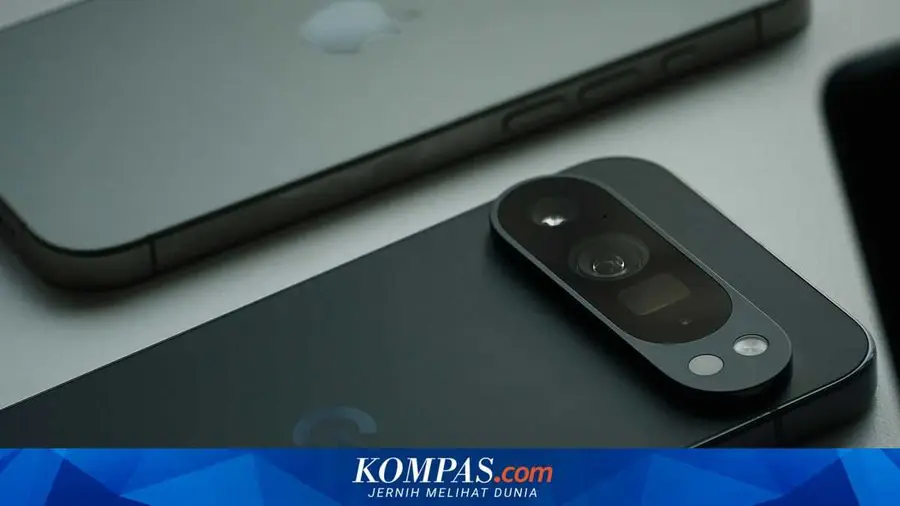
In today's digital era, smartphones have become very common. However, over time, many devices become obsolete and unused. Instead of discarding them, researchers at the University of California San Diego (UCSD), in collaboration with Google, are converting old smartphones into more affordable and environmentally friendly server solutions.
Recycling for a Better Environment
This project aims to recycle old smartphones that have long been neglected. Google Research revealed that every smartphone produced carries a "carbon footprint" from its manufacturing process. Therefore, extending the device's lifespan is considered more sustainable than discarding it and buying a new one.
In this study, old smartphones, particularly Pixel phones about three years old, showed surprising performance. In certain tests, the single-core performance of these phones was higher than some data center-class server processors. This indicates that although the devices are outdated, they still have potential for computing use.
Utilizing Smartphones as Data Centers
In this project, the research team made several modifications to the smartphones. The process began by dismantling the phones and removing unnecessary components such as the screen, battery, and camera. Only the motherboard containing the chipset, which is the brain of the smartphone, was retained.
Afterward, the Android operating system used on the phones was replaced with Linux, which is more commonly used on servers and data centers. Using Linux allows the smartphones to run orchestration software like Kubernetes, which is very useful for managing applications.
Promising Test Results
Tests showed that between 25 and 50 used smartphones could produce computing power equivalent to a single dual-socket server processor. This is an encouraging result and demonstrates that devices considered obsolete can still perform important computing tasks.
Furthermore, UCSD found that a cluster of 20 used smartphones was sufficient to run applications needed for learning, serving more than 75 students simultaneously. With this approach, applications no longer need to rely on cloud services that often require additional costs and larger data center infrastructure.
Future Prospects with Used Smartphones
The UCSD research team also plans to build a local data center consisting of around 2,000 used smartphones, which is expected to meet the needs of hundreds of classrooms simultaneously. This is a very efficient step, especially amid rising prices of components like memory chips and storage.
However, although this approach is promising, the researchers acknowledge it may not be widely adopted by large tech companies operating large-scale AI data centers. Hyperscale operators like Google, Microsoft, or Nvidia typically require specialized hardware with high reliability and fewer components to simplify management.
On the other hand, this smartphone-based system is very suitable for use in campuses, educational institutions, research laboratories, and small organizations with limited budgets. With this innovation, Google and UCSD can help create more sustainable and affordable technology solutions for society.
With the goal of starting full system operations this year, the research team continues to test the durability of smartphone components for long-term use as server devices. This is an exciting step toward more efficient and environmentally friendly technology utilization.
Source: https://tekno.kompas.com/read/2026/06/23/19010067/google-sulap-hp-lawas-bekas-jadi-server-murah