
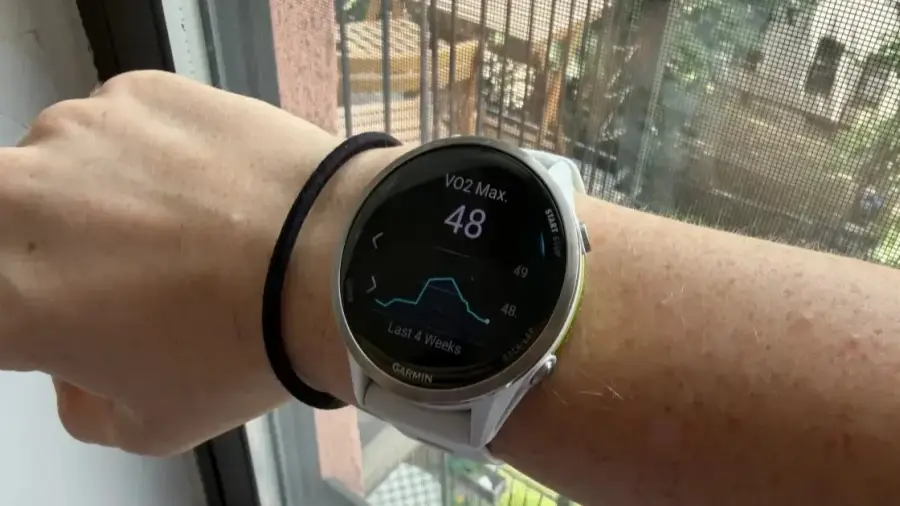
Garmin users often notice a significant drop in their VO2max readings during the hot summer months, even when their training routine remains consistent. This occurrence is not a malfunction of the device but rather a physiological response to heat, which can confuse the Garmin algorithms into interpreting high effort as a decline in fitness.
Why Does VO2max Decrease in Summer?
Each summer, runners report a decline in their Garmin VO2max estimates. Online forums and comment sections are filled with users expressing concern that their fitness levels are deteriorating or that their devices are malfunctioning. However, this is a common phenomenon and shouldn't induce unnecessary panic.
In reality, actual fitness levels are likely unchanged. Instead, the body is adapting to the heat, and Garmin's algorithm misinterprets the physiological changes as a drop in performance. This article aims to clarify the reasons behind these fluctuations, the devices affected, and methods to address the issue.
Understanding Garmin's VO2max Calculation
Garmin calculates VO2max based on running speed, heart rate, and exertion levels during workouts. In hot conditions, the heart rate tends to rise more quickly and remains elevated at the same running pace. This is due to the body directing blood flow to the skin for cooling purposes, which can lead to increased sweating and a slight risk of dehydration.
For Garmin’s algorithms, a higher heart rate at a stable pace indicates decreased efficiency. Consequently, the system erroneously interprets this as a reduction in fitness. Despite the same physical workload, the cardiovascular system is simply working harder to maintain a stable body temperature.
Seasonal Patterns in VO2max Readings
This explains why many runners observe a gradual decline in their VO2max estimates during the summer, which typically normalizes when cooler autumn weather arrives. Such seasonal patterns are commonplace and do not signify a loss of fitness.
It's important to note that not all Garmin devices handle heat data in the same way. Newer models, like the Garmin Forerunner 970, have begun incorporating heat and humidity factors into their VO2max calculations. This adjustment accounts for the additional cardiovascular load caused by environmental temperatures.
Managing VO2max Fluctuations
For users of the Forerunner series, models such as 745, 945, 955, and 965 feature heat acclimatization capabilities. Additionally, older models may not provide these adjustments, leading to the widespread discussion of VO2max drops among devoted Garmin users.
If you understand the underlying causes and can tolerate the fluctuations over the summer months, it is advisable to let it be. Your workouts remain effective, irrespective of what the Garmin algorithm indicates. However, for those seeking to minimize these fluctuations, several practical options are available.
- One straightforward solution is to adjust the activity profile settings to exclude certain activities from contributing to VO2max calculations entirely. In the Garmin Connect app, users can access their activity profile and disable VO2max calculations for specific activities.
- A common approach is to allow the road running profile to continue contributing to VO2max, as road running tends to have more consistent paces. Meanwhile, you can disable calculations for trail running, where elevation changes and varied terrain can make VO2max readings less reliable.
- Another option is to create a custom activity profile named "Hot Run." By copying an existing running profile, renaming it, and disabling VO2max calculations for the copy, users can switch to this profile during extremely hot or humid conditions.
- Finally, for those wanting to maintain consistent VO2max estimates year-round, transitioning workouts to an air-conditioned treadmill can help. Controlled temperatures and humidity levels provide a heart rate response that better reflects actual fitness rather than heat stress.
However, pursuing perfect numbers may sacrifice the mental and physical benefits of training in the heat. Adapting to higher temperatures is a form of fitness in itself. Don’t let VO2max figures distract you from your overall training goals.
In conclusion, experiencing a drop in VO2max during the summer is one of the most common misconceptions in the running community. While it can be concerning to see fitness scores decline, remember that the body requires energy to adapt to heat, which represents a different kind of fitness. Whether you choose to ignore the drop, adjust your activity settings, or move your primary workouts indoors, the key is not to let a single algorithm-generated number convince you that months of hard work have been in vain. Your body remains strong, and data will normalize as the weather cools down.
Source: https://telset.id/how-to/garmin-vo2max-turun-saat-cuaca-panas-ini-penyebab-dan-cara-mengatasinya