Major Investment by Toto in Semiconductors
The well-known Japanese bathroom fixture manufacturer, Toto, recently announced an ambitious plan to invest 80 billion yen, equivalent to around Rp 8.8 trillion. The purpose of this investment is to expand its business line in the semiconductor or chipset sector. Over the next five years, Toto will allocate funds to support the development of next-generation chip manufacturing technology, including semiconductors with an extremely small size of 1 nanometer (nm).
From Toilets to Chipsets: A Business Shift
Although Toto is better known as a producer of toilets and sanitary equipment, its semiconductor division is beginning to show significant profit potential. The company has experienced a surge in chip demand alongside the growing needs of artificial intelligence (AI) technology in recent years. This has become the main driver for the growth of Toto's semiconductor business.
According to a report from Nikkei Asia, out of the total planned investment, Toto has approved an allocation of 39 billion yen (about Rp 4.3 trillion). The remaining 41 billion yen (around Rp 4.51 trillion) will be planned for gradual realization in line with the dynamic semiconductor market developments.
Increasing Production Capacity
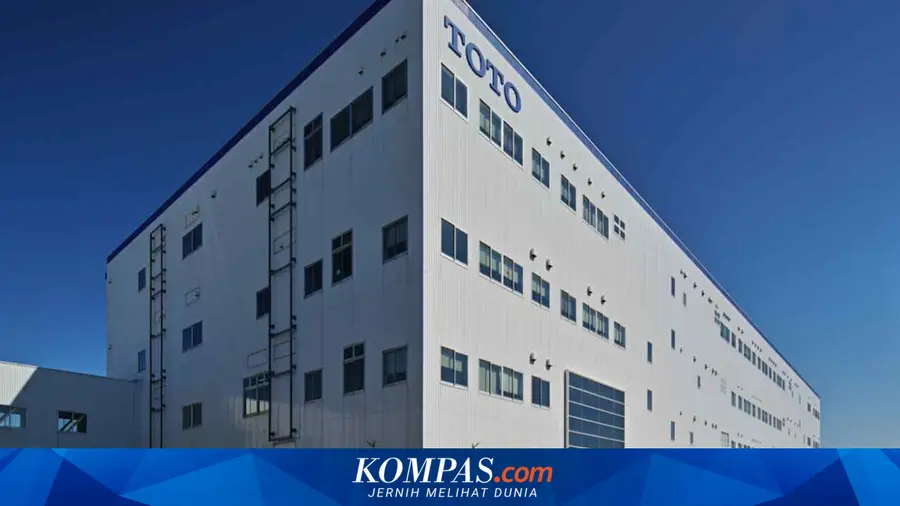
The funds from this investment will be used to increase production capacity at two of its manufacturing facilities located in Oita Prefecture and Fukuoka Prefecture, Japan. Both plants are currently operating at full capacity to meet the continuously rising semiconductor market demand. If, after the investment, market demand still cannot be met, Toto does not rule out the possibility of considering building a new factory.
Research and Development of Chip Technology
Besides focusing on increasing production capacity, Toto is also committed to developing materials that support the manufacturing of next-generation logic chips. The research and development (R&D) process is conducted at their facility in Kanagawa Prefecture, near Tokyo. Here, their main focus is on semiconductor technology sized around 1 nm.
To provide perspective, the world's largest chip manufacturer, TSMC, currently produces logic chips using 2 nm process technology. Thus, Toto's step to develop 1 nm semiconductors demonstrates their ambition to compete in an increasingly competitive market.
In recent years, Toto's semiconductor materials business experienced losses. However, since 2020, this situation has started to change thanks to the surge in AI chip demand. In the fiscal year ending March 2025, Toto's New Domain Business division, which oversees the semiconductor business, is expected to record sales of 67.4 billion yen (around Rp 7.43 trillion). This represents a significant increase of 34 percent compared to the same period last year. The division's operating profit also rose 42 percent to 28.9 billion yen (about Rp 3.18 trillion).
With this bold move, Toto shows that a company known for sanitary products can adapt and compete in an increasingly advanced technology industry.