
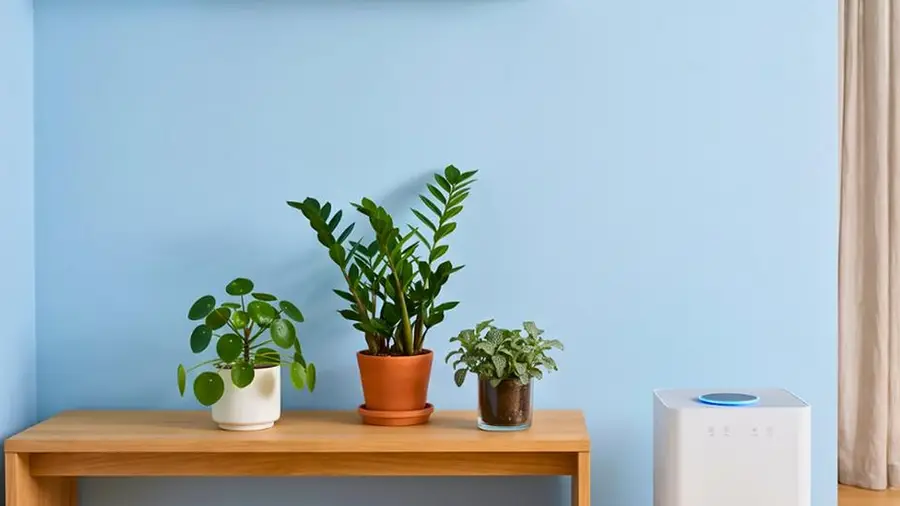
Indoor air quality often goes unnoticed, yet it can be significantly worse than outdoor air, featuring levels of pollutants 2 to 5 times higher, according to the Pertamina Central Hospital's official site. Everyday activities, along with dust and pet dander, contribute to this issue.
Exposure to indoor pollutants can lead to various health issues, particularly affecting children's development, including cognitive impairments and memory loss. Therefore, it is crucial to maintain good air quality at home for the well-being of the entire family. Preventive measures should be taken, such as ensuring proper air circulation and selecting the right cooling and air purification devices.
Using Air Conditioners for Healthy Air Circulation
Air conditioners (AC) not only provide cooling but also play a critical role in air circulation, impacting indoor air quality. Choosing the right AC unit can help maintain optimal temperature and humidity levels while reducing the risk of mold and bacteria growth indoors.
- Inverter Technology: This feature ensures energy efficiency and stable temperature control without excessive power consumption.
- Air Filtration: Some AC models come with antibacterial filters or air purification technology.
- Corrosion-Resistant Coating: Essential in humid conditions like Indonesia's, this coating enhances the unit's longevity.
DAIKIN, a leading player in the air conditioning industry, offers the Nusantara Prestige Series, manufactured in Cikarang, West Java. This series addresses the challenges of AC use in Indonesia, including corrosion resistance through Hairpin Coating and Blue Fin Coating on the evaporator and condenser.
Models like the BETA Inverter are equipped with Super PCB technology, ensuring stable operation during voltage fluctuations, a common issue in various regions of Indonesia. These advantages make DAIKIN a top choice for homes in the country.
Enhancing Protection with Air Purifiers
While a quality AC can filter the air, adding an air purifier is recommended for comprehensive protection. Air purifiers effectively handle fine particles such as PM2.5, viruses, bacteria, and allergens that standard AC units might not fully eliminate.
The DAIKIN Air Purifier is equipped with advanced Streamer technology, capable of decomposing up to 99.9% of captured viruses and bacteria. This technology generates high-energy plasma discharge, creating high-speed electrons that break down harmful substances through oxidation.
Moreover, this product line features an electrostatic HEPA filter that captures particles as small as 0.3 microns. A sensitive PM2.5 sensor detects harmful airborne particles, allowing the device to adjust its performance based on the detected room conditions.
Maximizing Indoor Air Quality
By combining AC units with air purifiers, homeowners can significantly enhance indoor air quality. This combination ensures that the air breathed is not only cool but also free from pollutants and disease-causing germs.
Paying attention to indoor air quality is a long-term health investment. By selecting high-spec AC units and adding an air purifier for extra protection, families can breathe easier and healthier at home.
Conclusion
In summary, improving indoor air quality is vital for the health of every family member. The right combination of air conditioning and purification technology can create a safe and comfortable living environment.
Source: https://inet.detik.com/consumer/d-8571690/ac-dan-air-purifier-solusi-udara-di-rumah-lebih-bersih-sehat