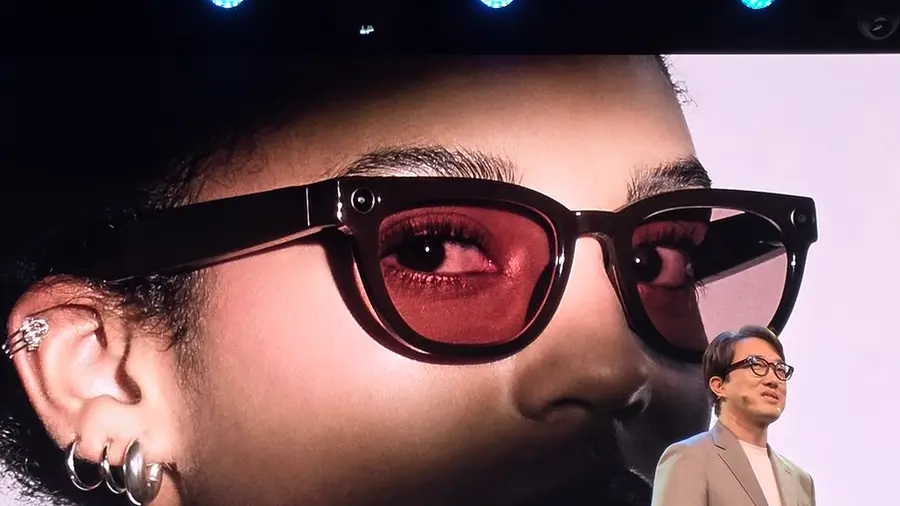
At the recent Samsung Galaxy Unpacked event, the tech giant from South Korea introduced its latest wearable device, the Samsung Galaxy Glasses. This innovative smart eyewear marks Samsung's official entry into the spatial computing market, positioning itself as a direct competitor to Ray-Ban Meta.
Introducing the Galaxy Glasses
The Galaxy Glasses are powered by the Snapdragon AR1 Gen 1 chipset, specifically designed for augmented reality applications, combined with Google's AI technology, Gemini Intelligence. Won-Joon Choi, President & COO of Samsung's MX Business, stated, "This is our latest smart wearable device. The glasses are equipped with Snapdragon AR1 Gen 1 and Gemini Intelligence, representing Samsung's next step in providing AI support to users throughout their day."
Lightweight and Stylish Design
One of the standout features of the Galaxy Glasses is their lightweight design, which Samsung claims is significantly lighter than many existing smart glasses on the market. To enhance the aesthetic appeal, Samsung collaborated with renowned eyewear brands Gentle Monster and Warby Parker, ensuring that the glasses are not only functional but also fashionable.
Choi emphasized, "These glasses are very light, even lighter than most AI glasses available today. We partnered with two leading brands, Gentle Monster and Warby Parker, to ensure a stylish appearance."
Enhanced Battery Life
Battery life has been a common concern with previous generations of smart glasses, but Samsung engineers have addressed this issue. Choi noted, "Lightweight alone is not enough. Samsung Glasses are also designed for everyday use, with a battery that lasts up to 9 hours on a single charge. Additionally, the charging case can recharge the glasses more than seven times on one charge."
Advanced Features and Connectivity
Despite their compact size, the Galaxy Glasses are equipped with a sophisticated array of sensors, including a micro camera for spatial mapping and eye-tracking capabilities. The transparent micro-OLED panel embedded within the lenses is said to project various 3D digital objects, seamlessly integrating them with the user's real-world environment.
The integration of Google's operating system allows the Galaxy Glasses to connect seamlessly with users' Galaxy smartphones and tablets. This connectivity provides users access to navigation, incoming messages, and app notifications directly through the lens projector, eliminating the need to pull out their phones.
During the Galaxy Unpacked event, Samsung showcased several interactive use cases for the glasses. Demonstrations included real-time translation of foreign text on billboards and interactive walking route guidance using virtual holographic arrows.
The Samsung Galaxy Glasses are expected to launch in the fall (around September to November) this year, although the official pricing details have yet to be disclosed.
Source: https://tekno.kompas.com/read/2026/07/22/22215927/samsung-umumkan-galaxy-glasses-kacamata-pintar-penantang-ray-ban-meta