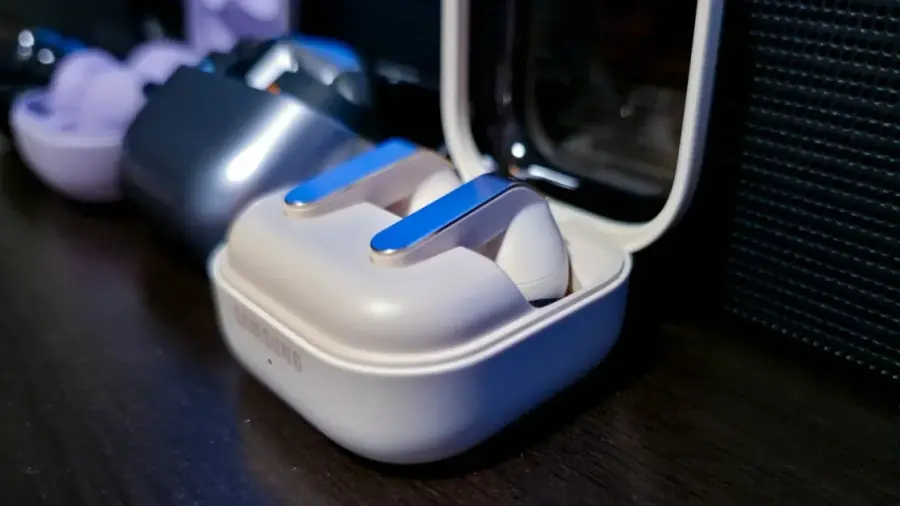
In today’s world, noise-canceling technology in headphones and earbuds has become an almost essential feature. However, many users find themselves confused about the differences between active noise canceling (ANC) and passive noise canceling. The fundamental distinction lies in how each technology operates: ANC utilizes computer algorithms to negate outside sounds, while passive noise canceling relies on physical objects to block noise.
What is Passive Noise Canceling?
Passive noise canceling is the more straightforward of the two technologies. It involves using physical barriers to prevent sound from reaching your eardrums. A common example of passive noise canceling is simply placing your hands over your ears. The same principle applies when you use earplugs or earmuffs.
In the context of headphones and earbuds, passive noise canceling occurs when you wear headphones without activating them. Almost all pairs of earbuds or headphones inherently offer some level of passive noise canceling, as they cover or fill your ears. Devices that do not isolate the listener passively are quite rare and are often designed for specific functions. For instance, open-back headphones are favored by musicians and audiophiles for their ability to produce more natural sound in studio or Hi-Fi settings.
Recently, open-ear earbuds have gained popularity among outdoor sports enthusiasts and fitness lovers. Products like Shokz OpenDots 2 rest outside the ear and direct sound inward while keeping the ear canal open. This design allows users to remain aware of their surroundings, making it safer for runners and cyclists in urban environments.
How Active Noise Canceling Works
Active noise canceling, or ANC, involves a small computer within your earbuds or headphones that uses algorithms to cancel out noise. It’s essential to understand that while passive noise canceling physically blocks sound, ANC actively negates it.
The microphones on the exterior of the device analyze the surrounding environment. The computer then generates anti-noise, which is a sound wave that is out of phase with the incoming noise. This is akin to adding a negative number to a positive one, resulting in zero. Thus, when external noise combines with the anti-noise, they effectively cancel each other out before reaching your eardrums.
Limitations of Active Noise Canceling
However, ANC does have significant limitations. To create accurate anti-noise, ANC headphones must precisely capture the original noise. Many manufacturers address this by incorporating multiple microphones; for example, the Sony WH-1000XM6 features a system of 12 microphones. Even so, these small microphones have their limits.
Additionally, ANC processors always experience a delay, reacting to noise instead of synchronizing with it. This is why ANC is most effective at reducing low-frequency, constant sounds, like air conditioning units, while you may still hear conversations in a café.
Combining Active and Passive Technologies
Due to these limitations, passive noise canceling serves as the first line of defense for ANC headphones. The more noise that can be physically blocked from reaching the listener's ears, the less noise the ANC processor has to manage. This explains why even the best noise-canceling earbuds cannot block out sound as effectively as over-ear headphones—placing something in the ear doesn’t block sound as comprehensively as covering it entirely.
To clarify, here’s a quick comparison between ANC and passive noise canceling:
- Passive Noise Canceling: Utilizes physical objects to block sound, does not require battery power, and is effective across all sound frequencies. Examples include covering your ears with your hands, using earplugs, or wearing unpowered headphones.
- Active Noise Canceling: Employs computers and algorithms to create anti-noise, requires battery power, and is most effective against constant low-frequency noise. An example is the Sony WH-1000XM6 with its array of 12 microphones.
It’s essential to remember that these two technologies complement each other. Even the best ANC headphones rely on a good passive seal for optimal results. Without an effective passive seal, ANC performance can significantly diminish.
For frequent travelers or those working in noisy environments, a combination of ANC and passive noise canceling is the best solution. Meanwhile, for individuals who need to remain aware of their surroundings, such as urban runners or cyclists, open-ear devices may be more suitable, even if they don’t provide robust noise cancellation.
Source: https://telset.id/how-to/perbedaan-active-noise-canceling-dan-pasif-cara-kerja-keunggulan