
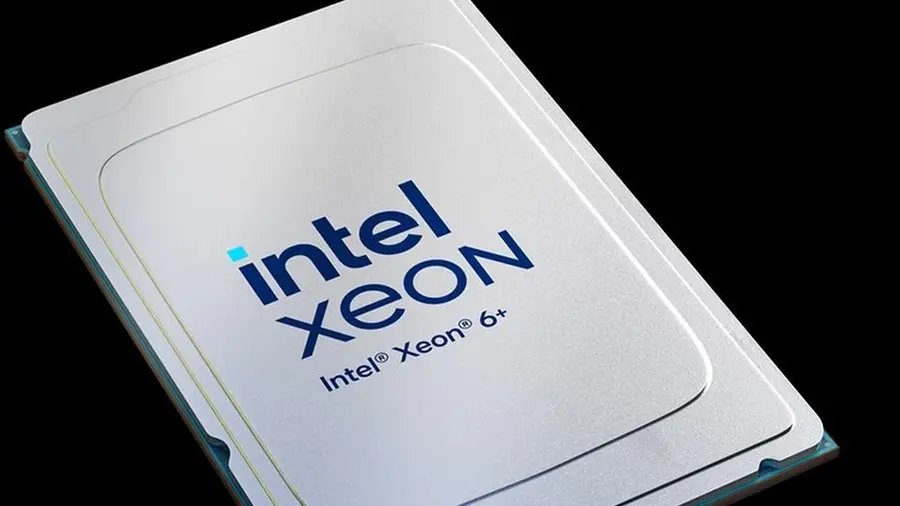
Intel is set to bring back its Hyper-Threading technology in the upcoming series of Xeon processors, specifically the ones codenamed “Coral Rapids.” This announcement was confirmed by Intel's CEO, Lip-Bu Tan, during the company's financial report for the second quarter of 2026.
Overview of Intel's Processor Lineup
According to Tan, Intel's data center processors include a variety of families such as Clearwater Forest, Diamond Rapids, and Coral Rapids. The inclusion of simultaneous multithreading (SMT) in Coral Rapids is a significant development aimed at enhancing server performance.
Performance Improvements with Hyper-Threading
During the conference, Tan highlighted the importance of boosting both single-thread and multi-thread performance, stating, “Multi-threading support will be present in Coral Rapids.” This technology allows a single physical core to function as two logical processors, enabling the operating system to allocate two sets of tasks to one core simultaneously. The goal is to optimize the use of idle processor resources.
Impact on Server Environments
Hyper-Threading does not automatically double the performance of a processor; the enhancement varies based on the type of applications and how effectively the software utilizes multiple threads. This technology is particularly beneficial in server environments that handle multiple tasks concurrently, including virtualization, cloud computing, and large-scale data processing.
Strategic Shift for Intel
The decision to reintroduce Hyper-Threading signifies a strategic shift for Intel, as the company had previously begun to phase out this technology in some of its latest processor generations. For instance, the Intel Core Ultra Series 2 no longer features Hyper-Threading, with Intel claiming that its new core architecture can efficiently manage single-thread workloads without it.
Intel had also removed Hyper-Threading to conserve chip space and reduce power consumption, reallocating that space to increase the number of physical cores or integrate other components within the processor. However, this approach is seen as less advantageous for data center processors. In the financial report, Tan emphasized the necessity of enhancing both single-thread and multi-thread performance to improve the competitiveness of Intel's server products.
The return of Hyper-Threading with Coral Rapids is part of Intel's strategy to regain ground in the data center processor market. However, the company has yet to disclose detailed specifications for Coral Rapids, including core count, core architecture, fabrication process, and performance improvements.
As of now, Intel has not confirmed whether Hyper-Threading will be reintroduced in consumer processors for desktop and laptop computers; the current announcement pertains solely to the Coral Rapids server processor line.
Source: https://tekno.kompas.com/read/2026/07/28/17020057/intel-bakal-hidupkan-lagi-hyper-threading-lewat-prosesor-xeon